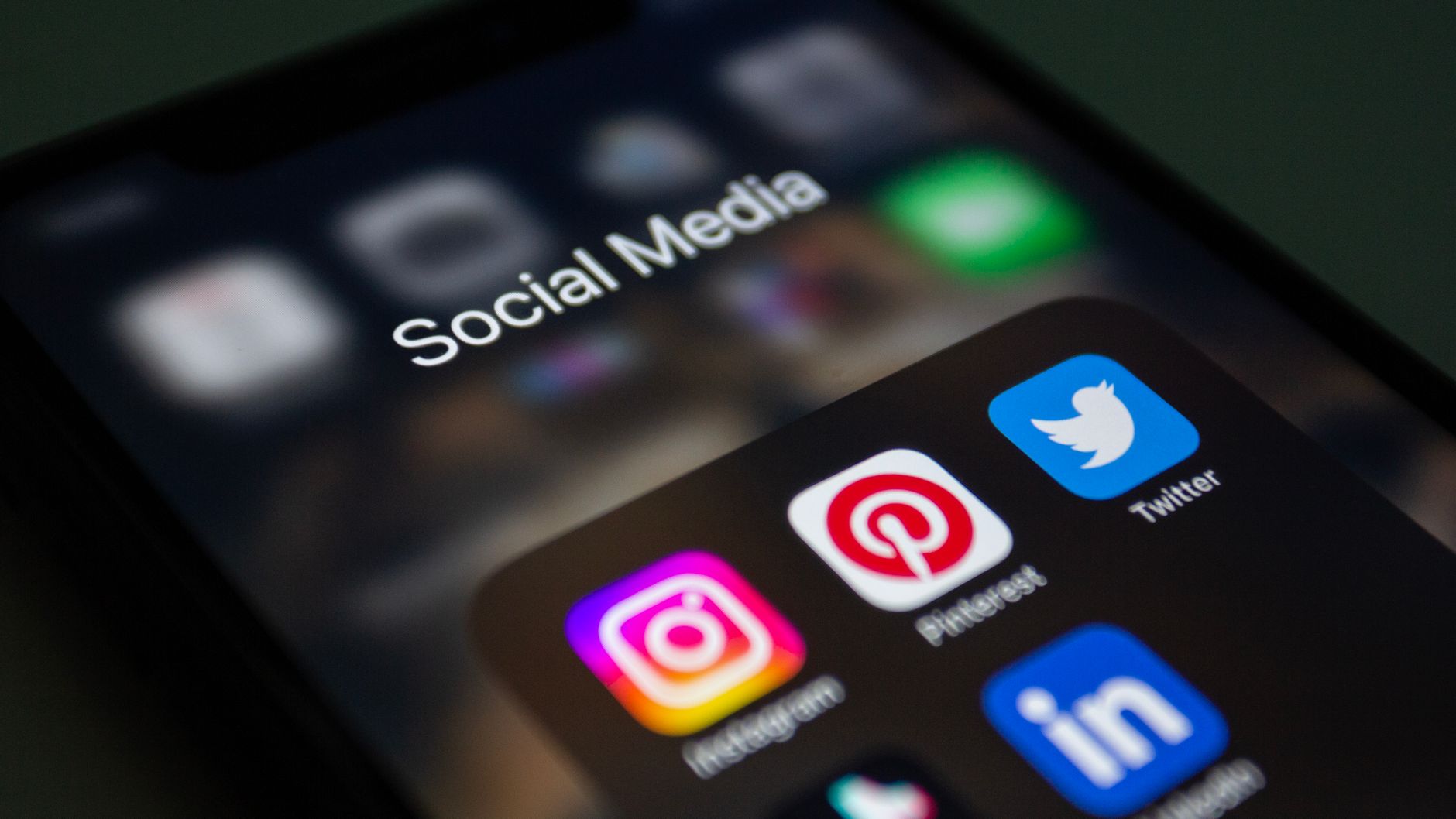
“Do social media really help my SEO?” It’s one of the most common questions we get, and the answer is more nuanced than a simple yes or no. Google has repeated it many times: likes, shares, and comments are not a direct ranking factor. And yet, sites that are active on social media statistically perform better in search. In this article, we untangle this apparent paradox, and look at how to build a genuine synergy between your social presence and your organic search performance.
Social media is not a direct ranking factor
Let’s start by clarifying this point, which is often a source of confusion. Google has confirmed many times that the number of likes, shares, or followers a page has doesn’t factor directly into its ranking algorithm. Unlike a backlink from a website, a social media share isn’t treated as a technical “vote of confidence” by the search engine.
This clarification matters, because it helps avoid a classic mistake: buying followers or likes, or posting frantically on social media hoping for an immediate effect on your Google ranking. That kind of strategy has, at best, no direct effect on SEO — and can even damage your brand’s credibility if the purchased audience is visibly fake.
So why does social media still matter for SEO?
While social media doesn’t directly influence the algorithm, it does create several indirect effects that are very real and end up impacting your search performance. That’s the nuance worth understanding.
1. It increases the discoverability of your content
An article shared on social media reaches people who might never have found your site through a Google search. Some of them run their own site or blog and may, if the content seems relevant, link to it — which, this time, is a genuine backlink in the SEO sense. Social media works as a discovery accelerator, increasing the odds of earning natural links down the line.
2. It generates direct traffic and brand searches
An active social audience generates direct traffic to your site, but also something more subtle: brand searches. Someone who discovers your business on social media, but isn’t ready to click right away, will often type your brand name into Google a little later. This volume of brand searches is a signal Google associates with a site’s notoriety and trustworthiness — a principle that directly echoes what we covered in our article on Google’s 2026 updates around authority and perceived trust.
3. Your social profiles take up space in search results
When someone searches for your business name, Google often shows, alongside your site, your LinkedIn, Instagram, or Facebook profiles among the top results. Active, complete profiles that are consistent with your brand image strengthen the overall credibility that comes across on that first results page — and also, incidentally, occupy space that a competitor or a less flattering third-party site might otherwise take.
4. It extends the lifespan of a piece of content
An article published once on your blog quickly loses visibility once it scrolls past your most loyal followers’ feed. Resharing it regularly on social media — from different angles, with varied excerpts — gives it new chances to be seen, clicked, and potentially linked to by others, well after its initial publication.
5. It speeds up the indexing of new content
This point is even more indirect, but real: content that quickly generates traffic and external clicks (via social media, among other channels) can be crawled and indexed faster by Google, simply because the activity around the URL increases the odds it gets detected early. It’s not a magic shortcut to indexing, but a useful side effect of good distribution.
The special case of local SEO
For a business with a local footprint — a shop, a tradesperson, a practice, a restaurant — the connection between social media and search visibility is even more direct. Customer reviews left on Facebook or on your Google Business Profile listing, geotagged posts, and mentions by other local accounts strengthen your presence within the local ecosystem Google factors into local search results (the well-known “local pack” that appears for locally-intended searches).
Regular social activity, consistent with the NAP details (name, address, phone) shown on your site and your Google listing, helps build a trust profile that Google associates with a real, active business — a particularly important signal for local SEO.
What Google actually monitors: behavior, not social stats
It’s worth understanding that what Google indirectly observes isn’t your like count, but the behavior of the people who land on your site — regardless of the traffic source, social media included. A visitor coming from social media who stays on the page a while, browses other content, or comes back later, sends a positive quality signal. Conversely, a spike of social traffic that bounces immediately (because the content doesn’t match what the post promised) doesn’t bring much, and can even be counterproductive.
In practice, this means the consistency between what you promise on social media and what the content actually delivers matters more than the raw volume of traffic generated.
How to build a genuine synergy between social media and SEO
Here are concrete actions to make the most of this indirect but real relationship:
- Systematically share every new piece of content, on the platforms where your audience actually is — no point being everywhere if it dilutes your efforts with no real benefit.
- Adapt the format to each platform, rather than reposting the same text everywhere: a visual carousel on Instagram, a more analytical post on LinkedIn, a punchy summary on X.
- Complete and keep your social profiles up to date, with a clear link to your site, a description consistent with your positioning, and professional visuals — these are what will show up in search results for your brand name.
- Encourage and respond to reviews, especially for a local business: they build trust and indirectly feed your local visibility.
- Reshare your best content over time, rather than sharing it once at publication and moving on to the next piece.
- Make sharing from your site easy: well-placed share buttons, without piling on third-party scripts that slow down the page (see our article on WordPress site optimization).
- Watch the questions and comments on your social channels: they often reveal content topics your readers are actively searching for, a source of ideas that complements your Search Console data analysis.
Social media and GEO: a new dimension
There’s a more recent angle to this question: generative engines like Perplexity or ChatGPT also rely on third-party sources — including forums and certain social platforms — to assess a brand’s reputation and trustworthiness, as we covered in our article on SEO vs GEO. An active, well-perceived social presence can therefore, indirectly here too, strengthen the odds of being cited favorably by these tools, beyond classic Google rankings alone.
That’s one more reason not to neglect this dimension, even though it remains, as with traditional SEO, an indirect lever rather than a measurable, guaranteed ranking factor.
How to measure the real impact of social media on your SEO
Since the effect is indirect, it’s harder to measure than a simple like count — but not impossible. A few concrete indicators to track over time:
- Brand search volume: visible in Google Search Console (queries containing your business name); a steady increase is often a sign that your social notoriety is translating into search interest.
- Referral traffic from social media, visible in Google Analytics, and above all its behavior once on the site (bounce rate, pages viewed, conversions) rather than just its volume.
- New backlinks earned after a piece of content spreads widely on social: a spike in shares followed, a few weeks later, by new inbound links is a clear sign the mechanism is working.
- The evolution of your rankings on brand-related queries, tracked with a rank-tracking tool rather than by feel.
Cross-referencing this data with your publication dates and periods of high social activity lets you spot, over several months, a far more reliable trend than a case-by-case assessment.
Mistakes to avoid
A few traps come up repeatedly when discussing the relationship between social media and SEO:
- Expecting a direct, immediate effect on rankings: that’s not how the relationship works — it stays indirect and builds over time.
- Buying followers or engagement: no real SEO benefit whatsoever, and a serious risk to your brand’s credibility if it shows.
- Neglecting consistency of information across your site, your social profiles, and your Google Business Profile listing (name, address, phone, hours) — inconsistencies hurt the trust these platforms place in your business.
- Posting without a link back to your site: social content that never points back to your site misses a good part of its traffic and discovery potential.
- Spreading yourself across too many platforms at once, at the expense of consistency and quality on the ones that actually matter to your audience.
A strong social presence follows the same logic as the other SEO pillars we covered in our guide to SEO basics: it doesn’t replace your site’s technical soundness or content quality, but it amplifies their reach and reinforces, over time, the trust and authority perceived by both Google and your visitors.
Run a free audit of your site to check that your technical and content fundamentals are ready to welcome the traffic your social media generates.
In summary
Social media isn’t a direct Google ranking factor, and you shouldn’t expect a mechanical, immediate effect on your rankings from it. What it does provide is a real, measurable role in content discovery, natural backlink generation, brand searches, local visibility, and — increasingly — how generative engines perceive a brand’s reputation.
Treat social media as an amplifier of your SEO strategy, not a shortcut to it: built together, over time, and with consistency, these two levers reinforce each other far more effectively than when worked on in isolation.