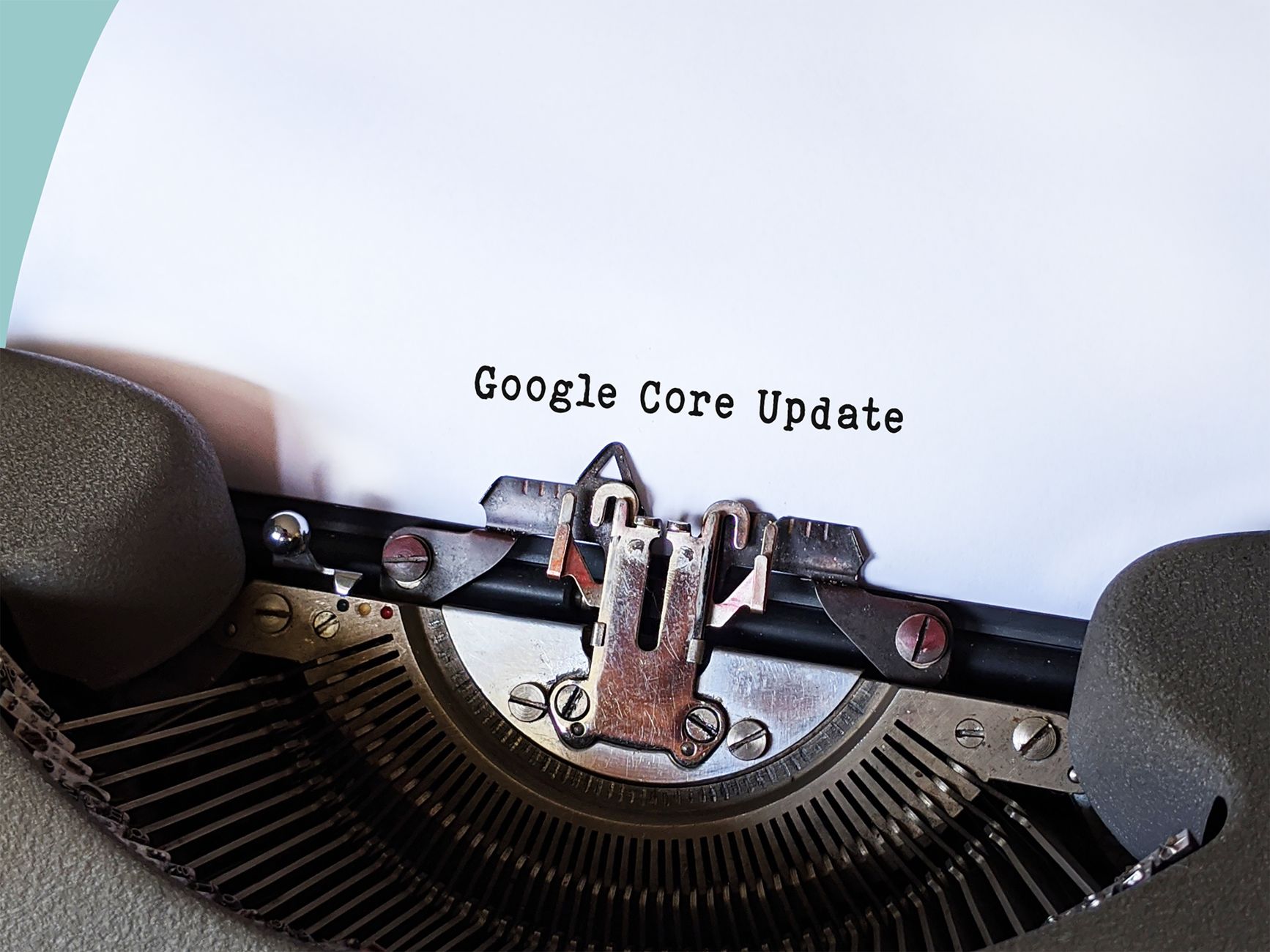
2026 has been an especially eventful year for SEO. Between several major Google algorithm updates and the massive expansion of AI-generated answers directly inside search results, many sites have seen their rankings move sharply — sometimes without making any changes on their end at all. In this article, we take stock of the main Google updates of 2026, what they actually mean, and above all how to respond intelligently rather than panicking at every announcement.
Why track Google’s updates?
Google constantly tweaks its algorithm, but most of these adjustments are minor and go unnoticed. Several times a year, however, Google rolls out so-called “broad core updates,” which can significantly reshuffle rankings across the board, along with targeted spam updates that specifically penalize techniques deemed manipulative.
Understanding the timing and nature of these updates lets you tell the difference between a traffic drop caused by a real problem on your site, and one caused by a global algorithm adjustment affecting an entire industry — two situations that call for completely different responses.
Overview of confirmed 2026 updates
Here are the main updates officially confirmed by Google over the course of the year:
- February 2026 — Discover Core Update: announced on February 5 and completed on February 27, this was the first update of the year, and the first one designed specifically for the Google Discover feed rather than classic search.
- March 2026 — Spam update: launched on March 24, it finished in just under 20 hours, making it one of the fastest spam updates Google has ever rolled out.
- March 2026 — Core update: rolled out from March 27 to April 8, this update caused a significant level of ranking volatility, with many sites seeing meaningful position shifts, both up and down.
- May 2026 — Core update: rolled out from May 21 to June 2, this second core update of the year also generated notable volatility, with several waves of ranking movement during the rollout.
- June 2026 — Spam update: applied globally across all languages, targeting sites using manipulative techniques to game the ranking algorithm.
Based on the pace observed since the start of the year, a new broad core update is generally expected in the third quarter — but as always with Google, no exact date is announced in advance: it’s better to stay alert than to try to guess the exact timing.
Core update or spam update: what’s the difference?
These two types of updates are often confused, even though they follow very different logic. A core update affects how Google broadly evaluates the quality and relevance of content relative to a query: it doesn’t target a specific site, but recalibrates the entire ranking system. A site that loses rankings during a core update generally hasn’t “done anything wrong” in a strict sense — it’s simply being reassessed, with a good chance of climbing back if it addresses the weak points identified.
A spam update has a much more targeted goal: detecting and demoting sites specifically using techniques deemed manipulative (mass-produced content with no added value, artificial link networks, content scraped from other sites, abuse of expired domains…). Unlike a core update, a penalty tied to a spam update is noticeably harder to recover from quickly, since it sanctions an identified practice rather than a simple global recalibration. That’s why it’s important to clearly distinguish between the two before looking for an explanation behind a traffic drop.
A closer look at the March 2026 update: E-E-A-T reinforced
The March 2026 core update drew particular attention from the SEO community. According to analyses published by several specialized tracking tools, it reinforced a principle already present in previous updates: E-E-A-T (Experience, Expertise, Authoritativeness, Trustworthiness), with a stronger emphasis on first-hand experience and verifiable author expertise.
Another concept comes up frequently in analyses of this update: “Information Gain,” meaning a piece of content’s ability to add genuinely new information compared to what already ranks well for the same query. In practice, this would favor content based on original research, proprietary data, first-hand testing, and concrete real-world experience — rather than rehashes of information already widely available elsewhere on the web.
Domain-level authority would also seem to carry more weight than isolated page-level optimization: sites that cover a topic in depth, from multiple angles and formats, appear to fare better than very general sites that touch on many topics superficially.
One reassuring point worth noting: this update doesn’t appear to penalize AI-assisted content as such. What matters is that the content is substantially reworked and reviewed by an identifiable expert, brings an original point of view, and is attributed to an author with verifiable credentials — a principle that directly echoes what we covered in our article on AI and Search Console.
The massive rise of AI in search results
Beyond classic algorithm updates, the most visible change of 2026 remains the expansion of AI-generated answers directly inside search results. AI Overviews (AI-generated summaries displayed at the top of results) are now said to appear on close to one search in two, up from roughly a third at the end of 2025 according to several industry studies — a rapid rise in just a few months.
At its Google I/O 2026 conference, Google also announced a deep redesign of the search bar built around its Gemini model, describing it as one of the biggest changes to Search in more than 25 years. AI Mode, originally offered as an optional tab, is reportedly becoming the default experience for a growing share of searches.
This shift has concrete consequences for site traffic: several independent analyses find that a good share of searches now end without any click to a site at all, with users finding their answer directly in the AI-generated summary. Conversely, being explicitly cited as a source inside an AI summary appears to generate a higher click-through rate than a classic position-one ranking — a new goal to factor in, alongside traditional rankings.
In practice, this further reinforces the importance of the points raised above: clear, well-structured content with direct answers and verifiable data has a better chance of being picked up as a source by these systems than vague content duplicated across the web multiple times.
What these changes mean for your site in practice
Faced with this constantly shifting landscape, a few principles remain valid no matter what the next announced update turns out to be:
- Your technical foundation needs to be sound: a slow, insecure, or poorly indexed site always takes updates harder than a technically solid one, regardless of its content.
- Thin or duplicate content is increasingly penalized: a small number of pages that genuinely and thoroughly answer a question beat a large volume of pages that all look alike.
- Expertise needs to be visible and verifiable: clearly stating who wrote a piece of content, and with what credentials, builds trust — for readers and, it seems, for the algorithm too.
- Diversifying traffic sources matters more than before: with the rise of zero-click searches, relying solely on classic organic rankings is riskier than it used to be; newsletters, social media, and the brand itself are becoming increasingly important.
How to react if your site is hit by an update
Seeing a traffic drop during or right after an update is stressful, but reacting hastily is rarely the right strategy. Here’s the approach to favor instead:
- Wait for the rollout to fully complete before drawing conclusions: a core update can take one to two weeks to roll out completely, and rankings can still shift several times during that period.
- Confirm it’s actually the update, and not an isolated technical issue: check in Search Console that the drop lines up precisely with the official rollout dates, rather than a technical incident on your end (site downtime, a configuration error, an expired certificate…).
- Identify the pages and queries most affected rather than reasoning from overall site traffic: a drop concentrated on a handful of specific pages points to very different causes than a broad, site-wide decline.
- Compare those pages against the principles above: content depth, visible expertise, absence of duplicate content, technical soundness.
- Avoid drastic, rushed changes: dramatically overhauling a site right after an update, without a clear diagnosis, muddies the analysis and can make things worse rather than better.
This is exactly the kind of situation where regularly tracking your technical score and rankings really pays off: instead of discovering a drop several weeks after an update, a continuously monitored dashboard lets you spot the exact moment things start shifting, and cross-reference that date with Google’s official update timeline.
Run a free audit of your site to check that your technical fundamentals are solid ahead of the next update.
Preparing ahead rather than reacting under pressure
The best strategy for dealing with Google updates isn’t trying to precisely guess what the next algorithm change will target, but building a site that stays solid regardless of any single adjustment: genuinely useful, regularly updated content, clearly identifiable expertise, a sound technical foundation, and diversified traffic sources. The sites hit hardest by each update are, most of the time, the ones that were already standing on shaky foundations — the update simply exposes a pre-existing problem rather than creating a new one.
Also keep in mind that the volatility observed during an update isn’t always permanent: rankings sometimes stabilize, or even partially recover, in the weeks following the official end of the rollout. Patience and regular monitoring remain, as ever, SEO’s best allies.
2026 has confirmed an underlying trend: Google keeps reinforcing the importance of verifiable expertise, genuinely new information, and technical soundness, all while increasingly weaving artificial intelligence directly into its search results. These changes don’t fundamentally alter the principles of good SEO — they simply make them more demanding.
Rather than chasing every announcement, the best approach remains to work continuously on solid foundations — technical, content, and popularity — and to track your metrics regularly, so you can react with judgment, not haste, whenever a new update rolls out.
Sources: the dates and official facts cited in this article are based on Google’s own announcements (Google Search Central, the Google I/O 2026 conference) as well as independent coverage published by Search Engine Land and Search Engine Roundtable; the impact figures cited (click-through rates, share of searches affected) come from third-party industry analyses and should be read as rough orders of magnitude, not official figures released by Google.